
Materials
Narrow fabrics, trims and passementerie: what the terms mean
Four English words for one Polish one: what each covers, where it comes from and who uses it.
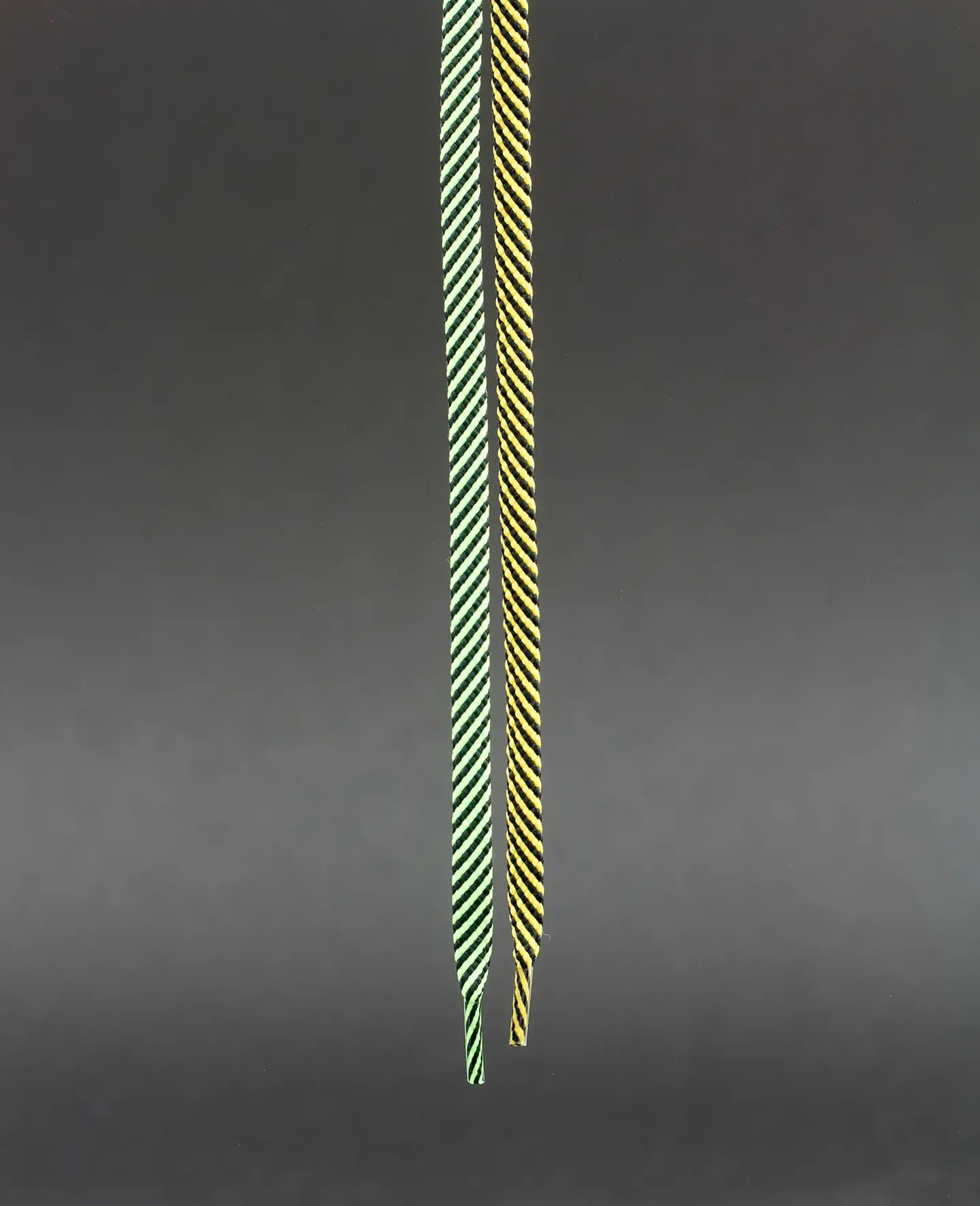
Narrow fabrics are textiles made in small widths with finished edges: webbing, tapes, elastic tapes, ribbons, cords and labels. English uses several overlapping words for them and for the trade around them. Polish has one, pasmanteria, which covers the products, the craft and the shop.
Four English terms
| Term | What it means | Who uses it |
|---|---|---|
| Narrow fabrics | Woven, knitted or braided textiles of small width, a few millimetres to several centimetres, that become part of a larger product. | Manufacturers and engineers. |
| Trims | Components added to a garment besides the main fabric: tapes, labels, cords, elastics, buttons and zips. | Clothing brands and buyers. |
| Haberdashery | In British English, small articles for sewing such as buttons, ribbons and zips, and the shop that sells them. American English calls the goods notions. | Retail. |
| Passementerie | Elaborate decorative trimmings: braid, gold or silver cord, tassels, fringes, gimp and galloons. | Furnishing, uniforms, historical dress. |
Where the words come from
Passementerie comes from the French passement, an early word for lace and ornamental edging. The Polish pasmanteria and the Italian passamano share the same root. An English Book of Rates from 1582 already lists six kinds of “passemin lace”. Haberdasher goes back to the Anglo-French hapertas, a word of uncertain meaning that may have named a fabric or small wares, and it appears in Chaucer.
A short history of the craft
Ornamental tapes and edgings were made in antiquity and had particular importance in the Byzantine Empire. From the early Middle Ages they decorated liturgical vestments and formal dress, and from the seventeenth century furniture upholstery as well. They were made of silk and metal thread, less often of wool, linen and cotton, first by tablet weaving and later on special looms.
In France a guild of passementiers was created in the sixteenth century, and becoming a master took a seven-year apprenticeship. In Kraków the Passementerie Makers' Tower, which the guild had to defend if the city was threatened, still stands. Factories took over production in the nineteenth century. In Poland it grew with the textile industry of Łódź, which was designated a factory settlement in 1820 and later became known as the Polish Manchester.
What counts as passementerie and trims
Traditional passementerie includes:
- woven tapes and ribbons, plain or patterned;
- braids and bindings for edging;
- galloons, which are tapes with metal thread, usually silver or gold;
- ornamental cords, soutache and gimp;
- fringes, tassels, pompons and rosettes.
Tassels, pompons and rosettes are point ornaments, and the rest are linear. Modern industrial production is mostly functional: garment and technical webbing, elastic tapes, cords and shoelaces, bindings and clothing labels. Terms used when ordering them are explained in the B2B textile webbing and trims glossary.
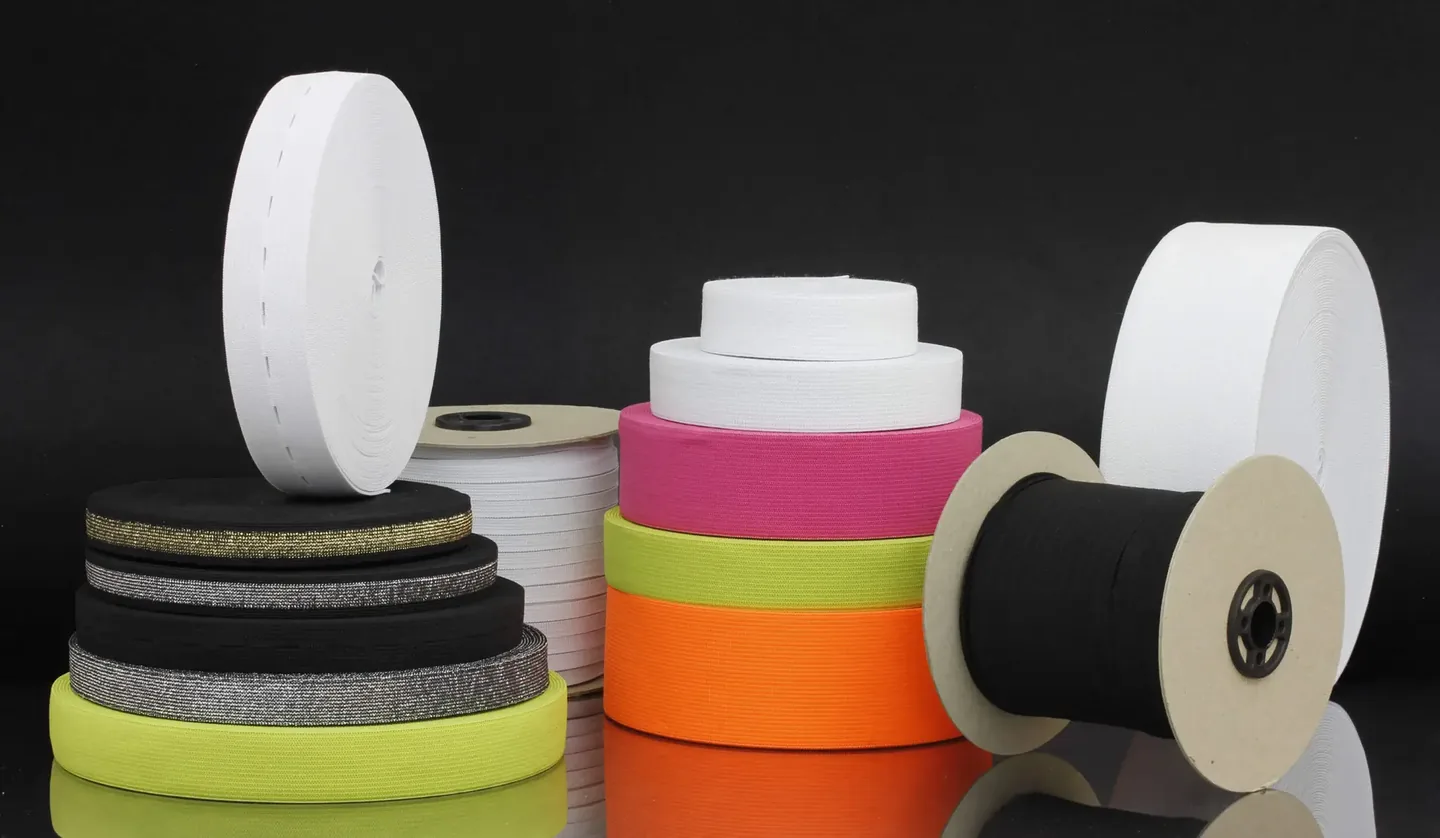
Shop, wholesaler and manufacturer
A haberdashery shop sells thread, buttons and ribbon by the metre or by the piece. A wholesaler sells the same goods in larger packs, usually from stock. A narrow fabric manufacturer makes them to order, to the customer's specification: in an agreed width, colour and pattern, and in a put-up ready for further production (see How narrow fabrics are supplied).
Frequently asked questions
What are narrow fabrics?
Textiles made in small widths with finished edges, such as webbing, tapes, elastic tapes, ribbons and cords.
What is passementerie?
Elaborate decorative trimmings such as braid, tassels, fringes and metal-thread cord, used on clothing and furnishings.
What is the difference between trims and haberdashery?
Trims is the garment industry's word for components added to the main fabric. Haberdashery is the British retail word for small sewing articles and the shop that sells them.
What does the Polish word pasmanteria mean?
It covers narrow fabrics and trims as products, and also the shop that sells them. A Polish “producent pasmanterii” is a narrow fabric manufacturer.
Sources
- Wikipedia, “Passementerie” and “Haberdasher”, en.wikipedia.org
- Wikipedia, “Pasmanteria” and “Szmuklerz”, pl.wikipedia.org
- Słownik języka polskiego PWN, “pasmanteria”, sjp.pwn.pl