
Guides
Spools, rolls, hanks and cut lengths: how narrow fabrics are supplied
The last stage of production: winding, cutting, labelling and packing the product in a form that suits the customer.
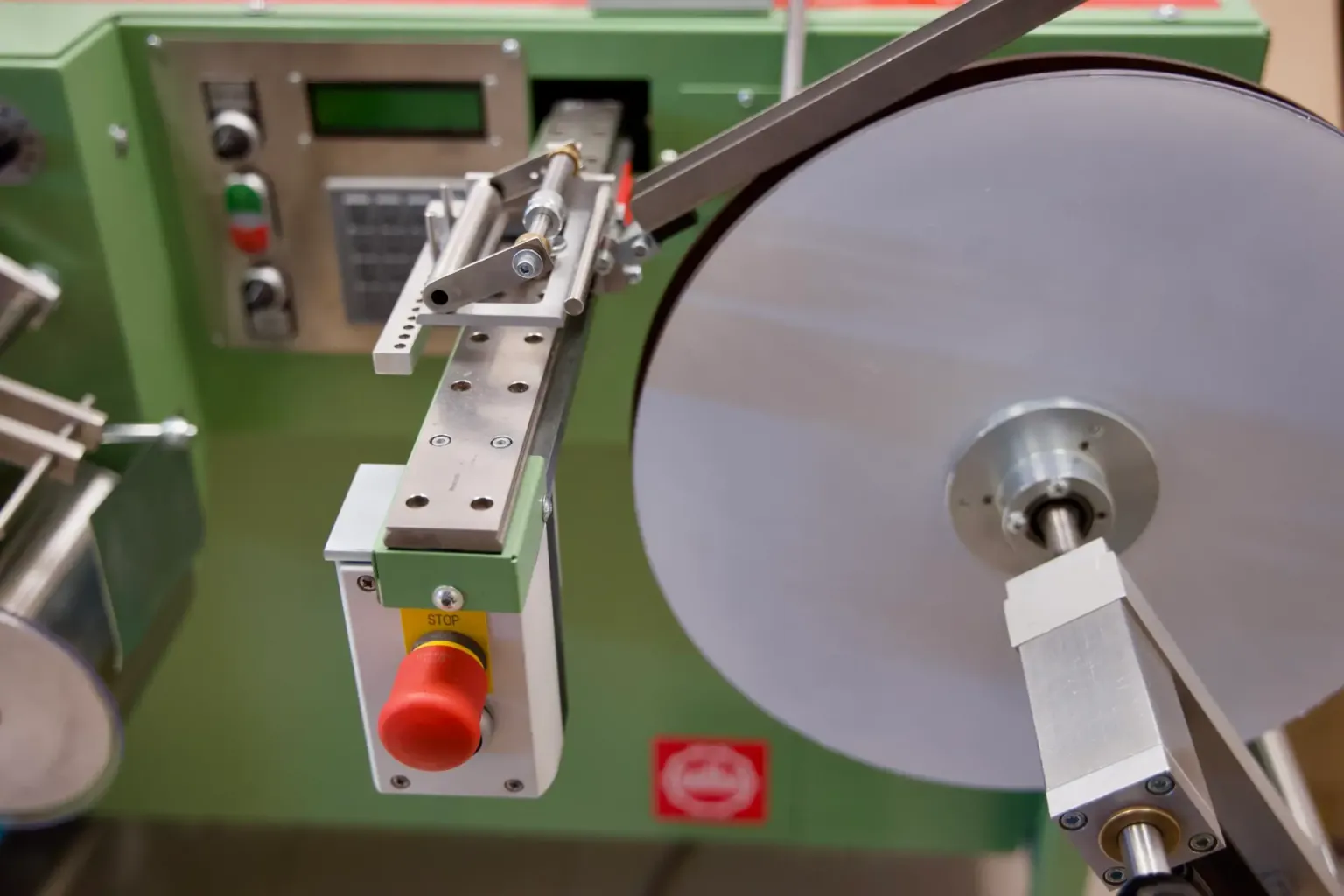
Put-up is the form in which a product reaches the customer: wound onto an agreed carrier, cut to length, labelled and packed. In the production of webbing, elastic tapes and cords it is the last stage before dispatch. It decides whether the product can go straight onto a machine or onto a shelf.
Forms of put-up
| Form | Description | Typical products |
|---|---|---|
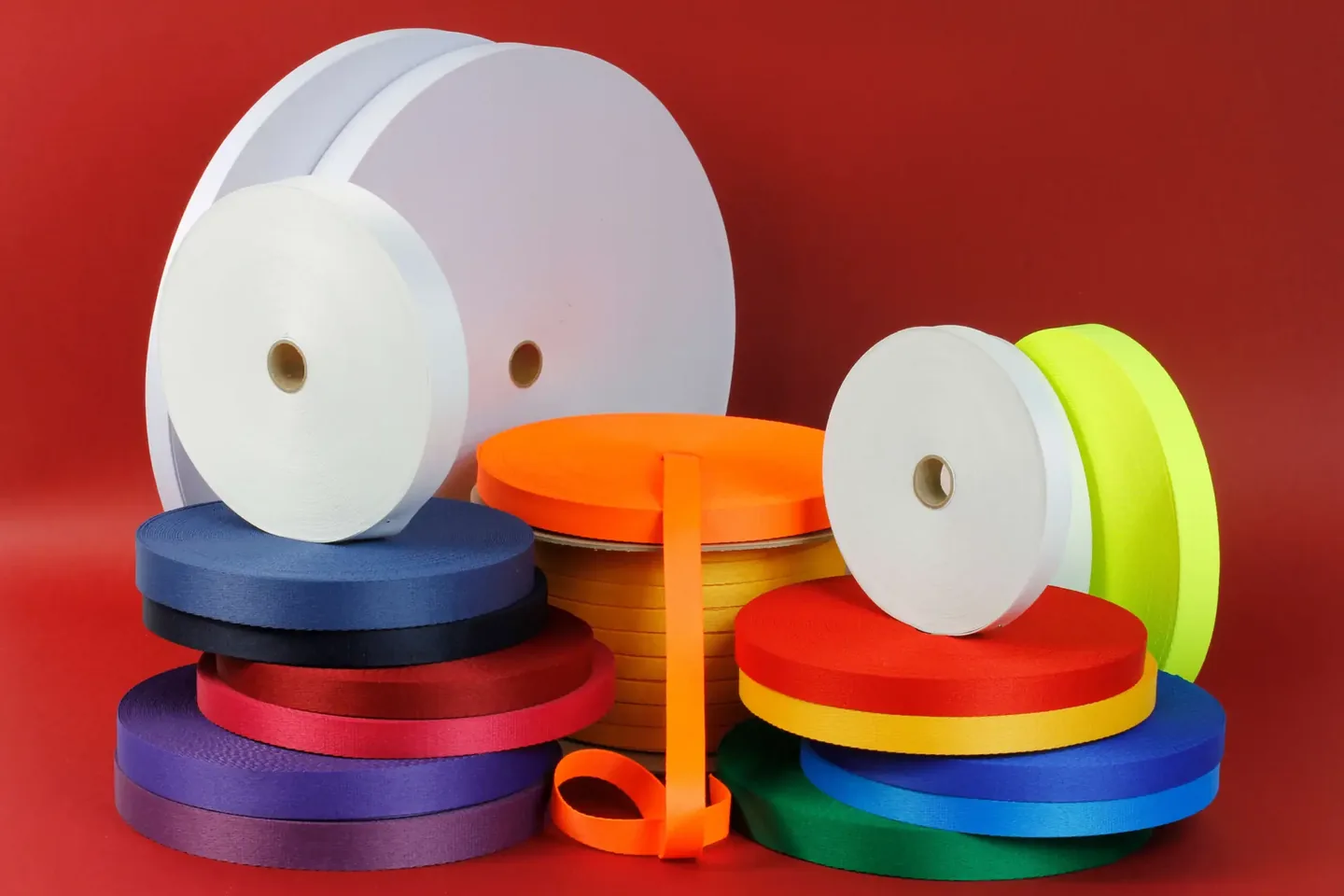
| Spool | A cylinder, with or without flanges, onto which the product is wound. It unwinds evenly on a machine. | Elastic tapes, cords and narrow tapes for volume production. |
| Roll | Tape wound flat, layer on layer, usually on a cardboard core. | Load-bearing webbing, bindings, jacquard webbing. |
| Hank | A length coiled loosely into loops and tied. | Cords, elastic cords and ribbon for retail sale. |
| Cut lengths | The product cut to an agreed length, loose or in bundles. | Shoelaces, drawcords for hoodies, bag handles, labels. |
The length on one spool or roll is agreed in the order. A larger package means fewer changes on the machine, and a smaller one is easier to share between workstations.
Cutting to length
Webbing and cords of synthetic fibres are hot cut: a heated blade melts the end so that it does not fray. Cotton products are cut cold and secured in another way, for example with a fold or a tip. Shoelaces and drawcords receive aglets after cutting. For cut lengths the order states the length, the permitted tolerance and how the end is finished.
Shoelaces in pairs with a paper band
Shoelaces meant for retail sale, or for packing with footwear, are put together in pairs. The pair is folded and held by a paper band, which can carry the brand, the length and a barcode. Other options are tying in bunches of several dozen pairs or packing in bags. Laces for footwear manufacturers are also supplied loose, counted in pairs for each length and colour.
Bundling and strapping
Strapping, also called bundling or banding, means applying a strap to items to combine, stabilise and hold them. Bundling and strapping tapes are made mainly of polypropylene, which is enough for light and medium loads, and of polyester where more strength is needed. The method holds together finished textile products as well as the cartons in which they travel to the customer. Both fibres are described in Webbing by material.
Labelling and outer packaging
Each unit should carry a label with the product name, width, colour, length or number of pieces, and the batch number. The batch number links a delivery to the approved sample and makes repeat orders easier. Units are packed in cartons with an agreed content, and on pallets for larger deliveries.
What to agree in an order
- The form of put-up or the cut length.
- The length or number of pieces per unit.
- The type of carrier and the bore of the spool, if the product goes onto a machine.
- The end finish: hot cut, aglet or fold.
- The label content and the outer packaging.
Frequently asked questions
What does put-up mean for webbing?
It is the form in which the webbing is delivered: wound on a spool or roll, cut to length, labelled and packed.
How are shoelaces packed for retail?
Usually folded in pairs and held by a printed paper band that shows the brand and length.
What is the difference between a spool and a hank?
A spool is a rigid carrier from which the product unwinds evenly on a machine. A hank is a loosely coiled and tied length, convenient for retail sale.
Why is synthetic webbing hot cut?
A heated blade melts the fibres at the end of the webbing, so the edge does not fray.
Sources
- Wikipedia, “Bobbin”, “Hank (unit of measure)” and “Strapping”, en.wikipedia.org