
Materials
Aglets: the tip of a shoelace, its history and how it is made
The tip that keeps a lace from fraying: where the word comes from, its history, materials and production.
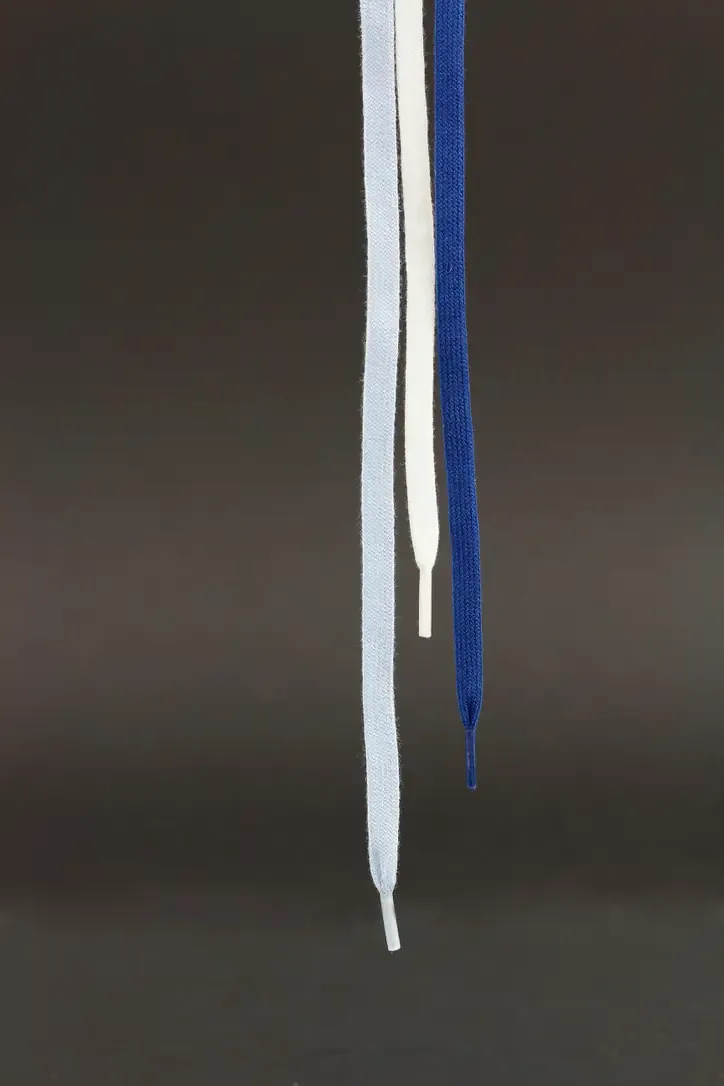
An aglet (also aiglet) is a small, stiff sheath on the end of a shoelace, drawcord or cord. It keeps the fibres from unravelling and makes the end easier to thread through eyelets, holes and channels. Modern aglets are mostly plastic and less often metal.
Where the word comes from
“Aglet” comes from the Old French aguillette, a diminutive of aguille, “needle”, which goes back to the Latin acus, “needle, pin”. An aglet turns the soft end of a cord into something like a blunt needle. A related word is aiguillette, the ornamental cord with metal tips worn on military dress uniforms.
History
The oldest known leather shoe, found in the Areni-1 cave in Armenia and dated to about 3500 BC, was drawn tight with a leather thong passed through slits in the hide. Ötzi the Iceman, from about 3300 BC, had laces of lime bark string in his shoes. The Romans fastened footwear with wide straps hooked onto eyelets.
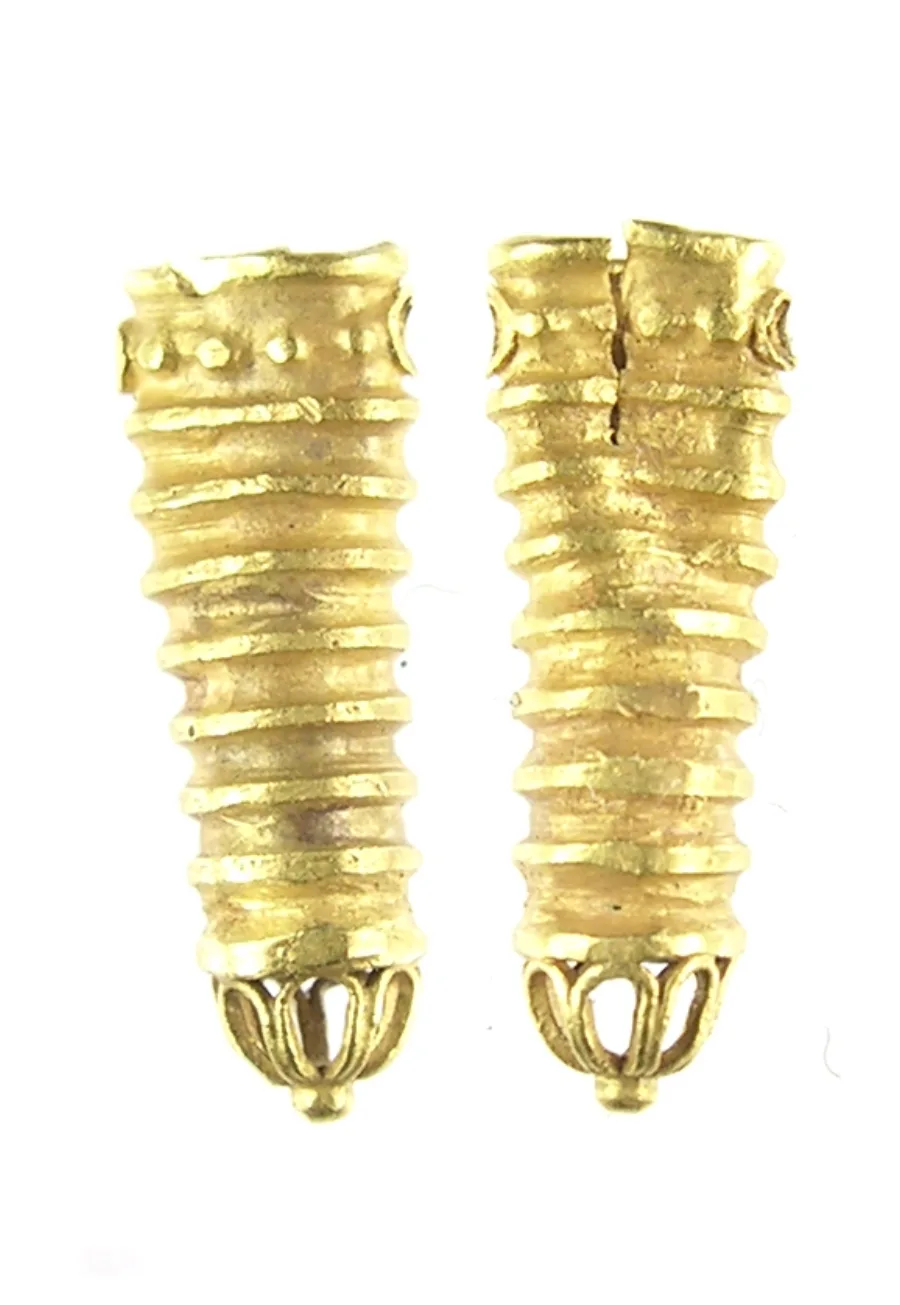
Before buttons became common, clothes were fastened with laces and ribbons threaded through holes. Their ends were capped with ornamental tips of metal, glass or stone, sometimes shaped as small figures. Wealthy Romans are said to have had aglets of brass or silver. Gold aglets from the sixteenth century have been found in England, where they were worn in pairs to decorate hats and doublets. Shakespeare mentions an “aglet-baby” in The Taming of the Shrew.
The modern shoelace with a hard tip is credited to the English inventor Harvey Kennedy, who according to several sources patented it in 1790. Shoes with eyelets reinforced by metal rings appeared around 1840. Together with aglets they made lacing much easier, although laces became widespread only in the twentieth century.
Types of aglet
| Type | How it is made | Features |
|---|---|---|
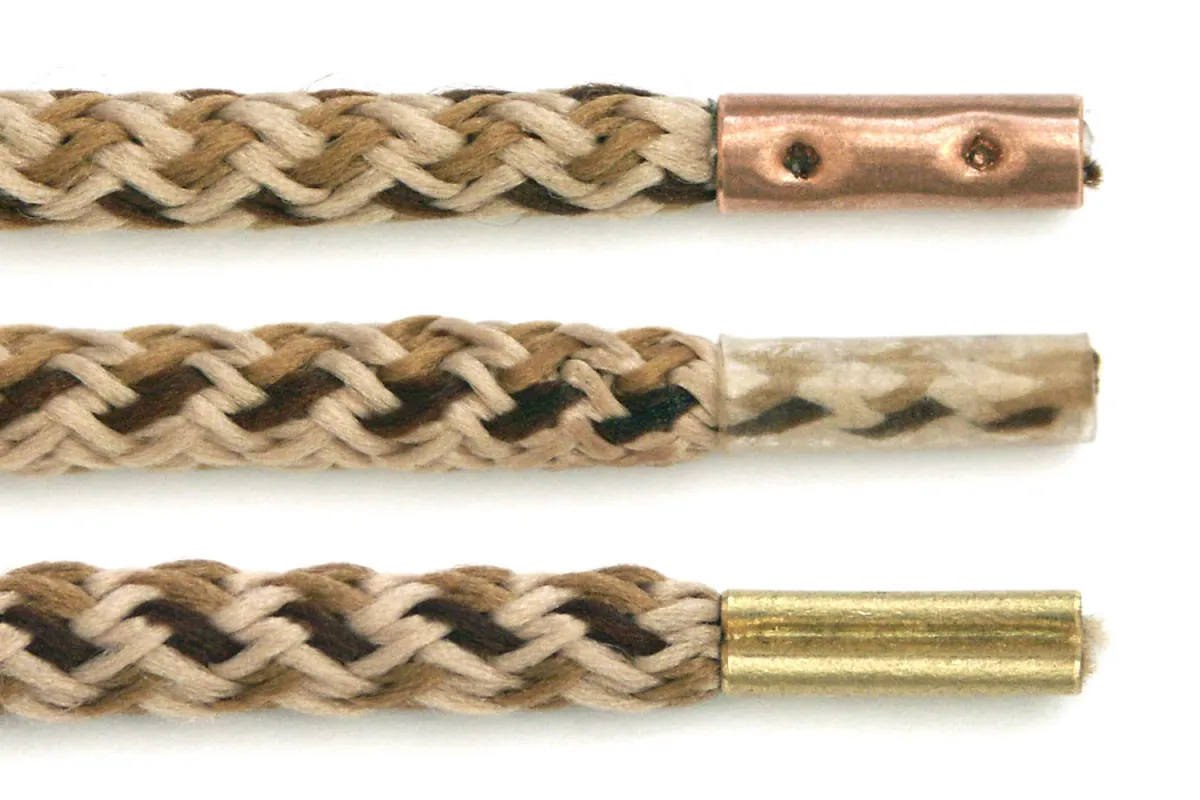
| Plastic film | A plastic tape, often cellulose acetate, wrapped round the end of the lace and fused with heat. | The most common type. Clear or coloured, light and economical in volume production. |
| Metal | A crimped tube of brass, copper, steel or aluminium. | Durable and decorative. Can carry an engraved logo. Used in premium footwear and clothing. |
| Moulded plastic or rubber | A tip formed directly on the cord. | Common on drawcords for hoodies. Available in many shapes. |
| Fused end | The end of a synthetic cord melted or dipped in resin. | The simplest solution and the least neat. |
Acetate film
Cellulose acetate is a thermoplastic first prepared in 1865 by the French chemist Paul Schützenberger. It bonds readily under heat and pressure, resists mould and is hypoallergenic. A machine wraps the end of the lace in plastic tape, and heat or a chemical then melts the film so that it bonds to the lace and to itself. The result is a smooth, stiff, clear tip. Spectacle frames are made of the same material.
How a shoelace with an aglet is made
- Braiding. Round and flat laces are usually made on braiding machines from cotton or polyester, sometimes round a core.
- Cutting to the required length.
- Tipping. An aglet is applied to both ends, in a length matched to the cord diameter and the eyelets of the product.
- Inspection and packing in pairs, bundles or sets for the footwear or clothing manufacturer's assembly line.
Lace length and number of eyelets
Approximate lace lengths by number of eyelet holes. The right length is set for the specific model and lacing method.
| Eyelet holes | Lace length |
|---|---|
| 4 | 75 to 85 cm |
| 6 | 100 cm |
| 8 | 120 cm |
| 10 | 130 cm |
| 12 | 150 cm |
| 14 | 180 cm |
| 16 | 200 cm |
Frequently asked questions
What is the tip of a shoelace called?
An aglet, also spelled aiglet.
What are aglets made of?
Most often plastic film fused onto the lace, and also metal such as brass, aluminium or steel, or moulded plastic.
Can an aglet carry a logo?
Yes, usually a metal one, by engraving or embossing. A logo can also be put on the lace itself, woven in or printed.
How long should an aglet be?
It depends on the cord diameter and the eyelets. A tip that is too short stiffens the end poorly, and one that is too long is awkward to thread through closely spaced eyelets.
Sources
- Wikipedia, “Aglet” and “Shoelaces”, en.wikipedia.org
- Wikipedia, “Sznurowadło”, pl.wikipedia.org
- Wikipedia, “Cellulose acetate”, en.wikipedia.org
- Photographs: gold aglet, The Portable Antiquities Scheme / The Trustees of the British Museum, licence CC BY-SA 2.0; three aglets, Ian W. Fieggen, licence CC BY-SA 3.0 (resized)

