
Materials
Cotton, synthetic and waxed shoelaces
Material, cross-section and surface finish decide how a lace holds a knot and how long it lasts.
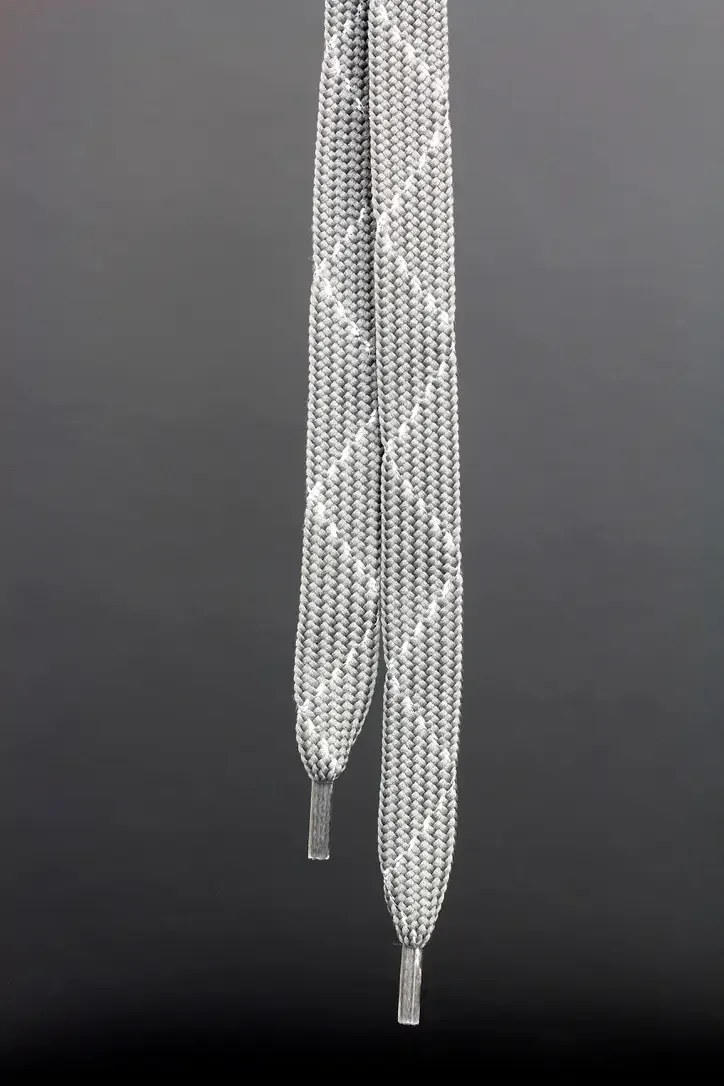
A shoelace (bootlace, shoestring) is a braided or woven cord used to fasten footwear. The same kind of cord draws in hoods, waistbands and bags. How a lace ties and how long it lasts depend on its material, its cross-section and its surface finish.
Materials
Laces were traditionally made of leather, cotton, jute and hemp. Polyester is now the most common yarn, alongside cotton and nylon.
| Material | Surface and knot | Durability | Where it is used |
|---|---|---|---|
| Cotton | Rough and matt. Holds a knot more reliably than polyester. | Absorbs water and wears through sooner. | Everyday and classic footwear, canvas shoes, clothing. |
| Polyester | Smoother, with moderate grip. | Resists moisture and abrasion and holds colour. | Sports and work footwear, drawcords for hoodies. Suitable for sublimation printing. |
| Nylon (polyamide) | Slippery, so the knot works loose more easily. | Very high breaking strength. | Skate shoes, paracord, technical cords. |
| Leather | Stiff, with a square section, and prone to coming undone. | Durable but needs care. | Moccasins and boat shoes. |
Synthetic fibres are generally more slippery than natural ones, so bows tied in them come undone more often. In return they cope better with moisture, do not rot and wear more slowly in the eyelets.
Flat and round laces
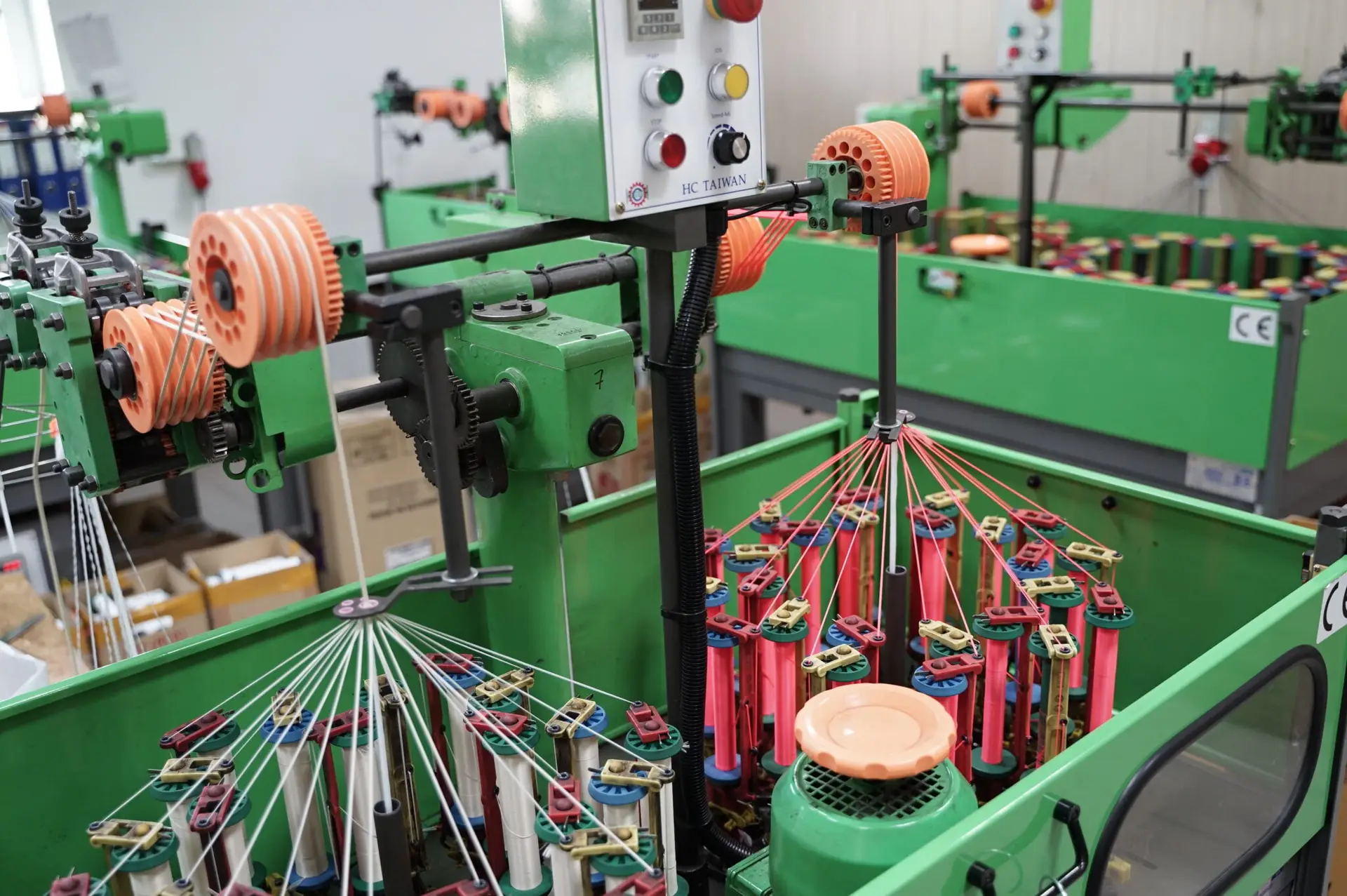
Laces are made on braiding machines. A flat lace is a tube pressed flat, and a round lace usually has a braided cover over a yarn core. Flat laces are easier to grip and stay tied more securely, because more of their surface is in contact. Round laces with a firm core are stiffer and pass more easily through small eyelets, but their knot needs to be pulled tighter. The ends of both are protected by an aglet.
Waxed shoelaces
A waxed lace is a cotton or polyester lace that has been impregnated with wax after braiding, usually paraffin or beeswax. The same method has long been used on fabric: paraffin-impregnated cotton was produced commercially from the 1920s as a material for rainwear.
Wax increases friction, so the knot does not work loose. It stiffens the lace and smooths its surface, which makes it look neater and thread more easily through eyelets. It also reduces water absorption. Waxing matters most for hiking and work boots, where a secure knot has practical value, and a silicone finish gives a similar effect. The wax layer wears away with use, and the lace becomes softer and more matt.
Laces and product safety
For children's footwear and clothing, and for products worn against the skin, buyers often ask for confirmation that components contain no harmful substances. The document most often cited is OEKO-TEX STANDARD 100, a label for textiles tested for harmful substances at every stage from yarn to finished product. Every component is tested, including threads and accessories. The scope of such certificates is explained in OEKO-TEX certification and textile documentation.
Frequently asked questions
Which shoelaces hold a knot best?
Cotton and waxed laces, because they have the most friction. Flat laces stay tied more securely than round ones of the same material.
What are waxed shoelaces?
Laces impregnated with wax. They are stiffer and smoother, absorb less water and come undone less often.
Are cotton shoelaces durable?
They resist abrasion and moisture less well than polyester laces, but they hold a knot more reliably and have a natural, matt look.
Why do synthetic laces come undone?
Synthetic fibres are smoother, so there is less friction in the knot. A flat lace, a waxed finish or a tighter knot helps.
Sources
- Wikipedia, “Shoelaces” and “Waxed cotton”, en.wikipedia.org
- I. Fieggen, “Shoelace Construction”, fieggen.com
- OEKO-TEX, STANDARD 100, oeko-tex.com