Materials
Clothing labels: types, functions and legal requirements
From a dressmaker’s signature to mandatory fibre composition: what a clothing label is, how it is made and what it must show.
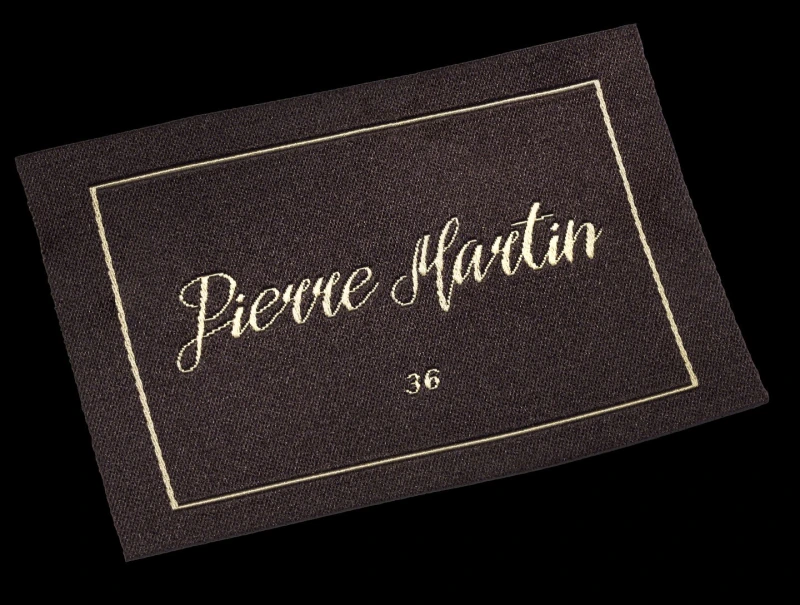
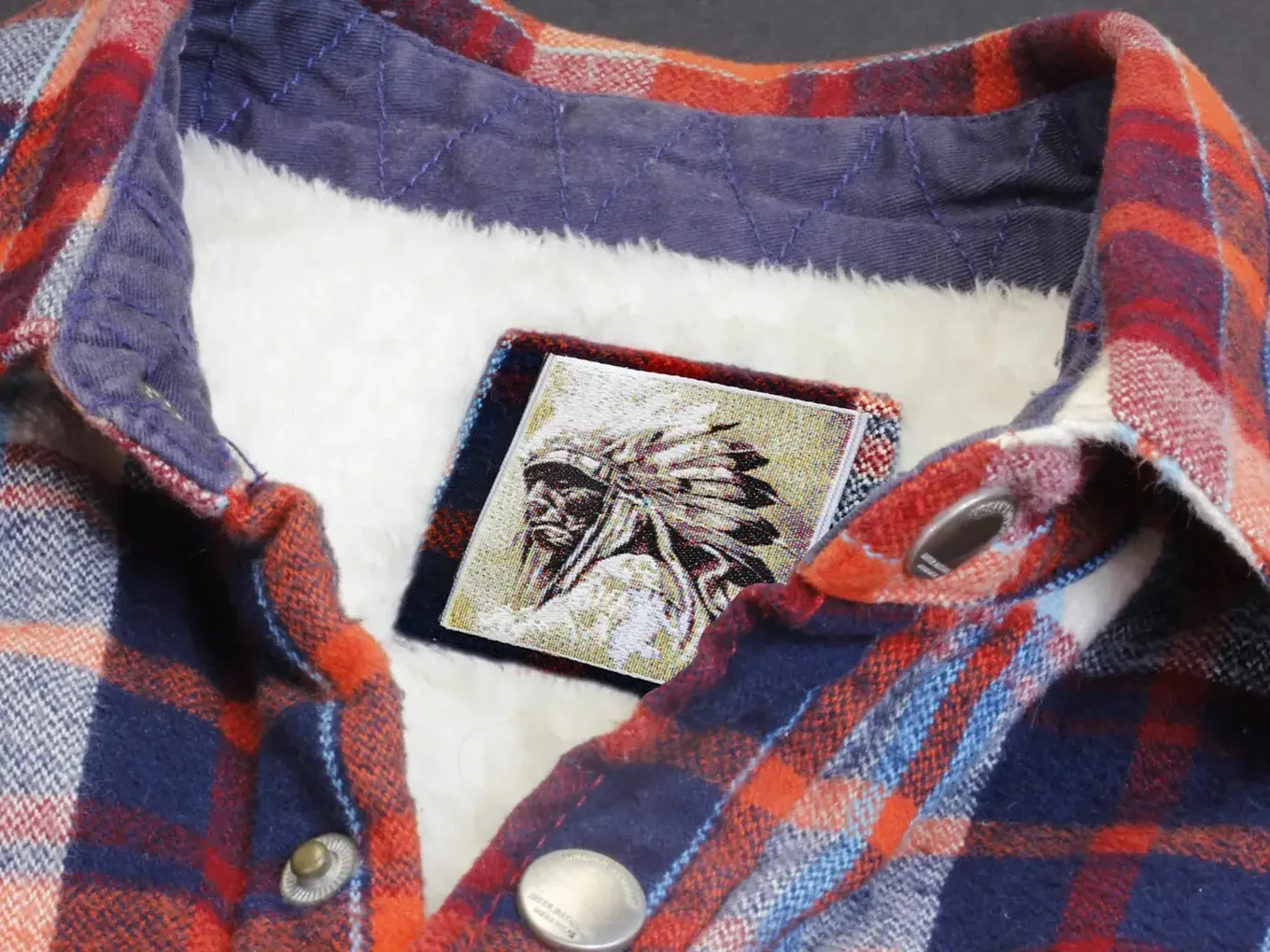
A clothing label (sew-in label, garment label) is a small piece of fabric or tape sewn permanently into a textile product. It carries the brand name, size, fibre composition, care instructions or other product information. A hang tag is removed after purchase, while a sew-in label stays with the garment for as long as it is worn. It usually sits where it cannot be seen in wear: at the back of the neck, in a side seam or at the waist.
What a label does
A label names the brand or the manufacturer and stays on the product for its whole life. It also gives product information: size, fibre composition, country of origin, batch number and care symbols. In the European Union, textile products placed on the market must state their fibre composition.
A short history of the brand label
For most of history clothes were made to measure and the customer knew the maker in person, so no mark was needed. The label with a maker's name appeared when designers began selling clothes under their own names. The pioneer is usually taken to be Charles Frederick Worth, an English dressmaker working in Paris. He founded his fashion house in 1858 and sewed a label with his name into his gowns, much as an artist signs a painting. Jacquard looms made labels common in the nineteenth century, because they could weave lettering into narrow tapes that were then cut into single labels (see The Jacquard machine).
In the twentieth century stating the fibre composition became mandatory, and care symbols were standardised in the international GINETEX system and in ISO 3758.
Types of clothing labels
Labels are grouped by how they are made, because the technique decides durability, appearance and the level of detail.
| Type | How the design is made | Features | Typical use |
|---|---|---|---|
| Woven (jacquard) label | Logo and ground are formed by yarns interlaced during weaving. The design is part of the fabric. | The most durable type. The design does not wear off in washing. A limited number of colours, and fine detail needs a dense weave. | Brand mark, size, collection name. |
| Printed label, on satin, polyester or cotton tape | Thermal transfer or screen printing on a finished tape. | Much text in a small format, low cost. The print can fade with time. | Composition and care labels. |
| Sublimated label | Dye passes from transfer paper into polyester fibres under heat. | Full colour, tonal transitions and photographs. Needs a pale polyester base. | Multicolour graphics, short promotional runs. |
| Flag label | A folded length of tape sewn into an outside seam, usually woven. | A visible brand accent on the outside of the product. | Pockets, side seams, bags, hats. |
| Patches and emblems | Embroidery, jacquard or other techniques on a textile backing. | A decorative element, often larger than a label. | Workwear, sportswear, uniforms. |
Sublimation and jacquard are compared in Sublimation printing on webbing and lanyards. Woven-label technology is described in Woven labels: how a jacquard label is made.
Finishing and folds
Comfort and appearance also depend on how the label is finished. The most common options are:
- straight cut: sewn on all four edges, the simplest to produce;
- end fold: the ends are turned under and the label is sewn on its short sides;
- centre fold, also called a loop: sewn into a seam, often as a flag label;
- Manhattan, mitre and hanger folds: variants in which the visible area and the seam allowance are set for a specific position.
A folded label has three dimensions to agree: the overall size, the area visible after folding, and the allowance for the seam or fold. The logo must fit within the visible area.
What the law requires on a label in the EU
Fibre composition labelling of textile products is governed by Regulation (EU) No 1007/2011 of the European Parliament and of the Council. Among other things it requires that:
- the product states its fibre composition, using only the fibre names listed in Annex I, such as polyester, elastane or cotton;
- multi-fibre products list every fibre with its percentage, in descending order;
- the label is durable, legible, visible and accessible, and securely attached;
- the information is given in the official language of the country where the product is sold.
Care symbols for washing, bleaching, drying, ironing and professional cleaning are not required by Regulation 1007/2011, but they are widely used under the GINETEX system and ISO 3758. The United Kingdom has its own textile labelling regulations. Care labelling is covered in Care labels: readability, comfort and durability.
Ordering custom labels
A manufacturer usually needs the following to quote for sew-in labels with a logo:
- the logo file, ideally a vector PDF with text converted to outlines, or a CorelDRAW file;
- the label size and where it will be sewn in;
- the ground and design colours;
- the cut and fold;
- the quantity of each variant, such as each size, and the required date.
Size, contrast and legibility are discussed in How to design a custom woven label.
Frequently asked questions
What is the difference between a label and a hang tag?
A sew-in label is attached permanently and stays with the garment. A hang tag is a card attached for sale and removed after purchase.
Which label lasts longest?
A woven label, because the design is made of yarn and is not printed on the surface, so it does not wear off in washing.
Does a label have to show fibre composition?
Yes. In the EU, textile products must state their fibre composition under Regulation (EU) No 1007/2011, in the language of the country of sale.
What is a sublimated label?
A polyester label onto which artwork is transferred by sublimation. It allows full colour and tonal transitions that weaving cannot produce.
Sources
- Regulation (EU) No 1007/2011 on textile fibre names and related labelling and marking of the fibre composition of textile products, eur-lex.europa.eu
- Wikipedia, “Charles Frederick Worth”, en.wikipedia.org