
Materials
Elastic tape: woven, knitted, braided and jacquard
A latex or elastane core in a textile covering: how garment elastic is built and how its constructions differ.
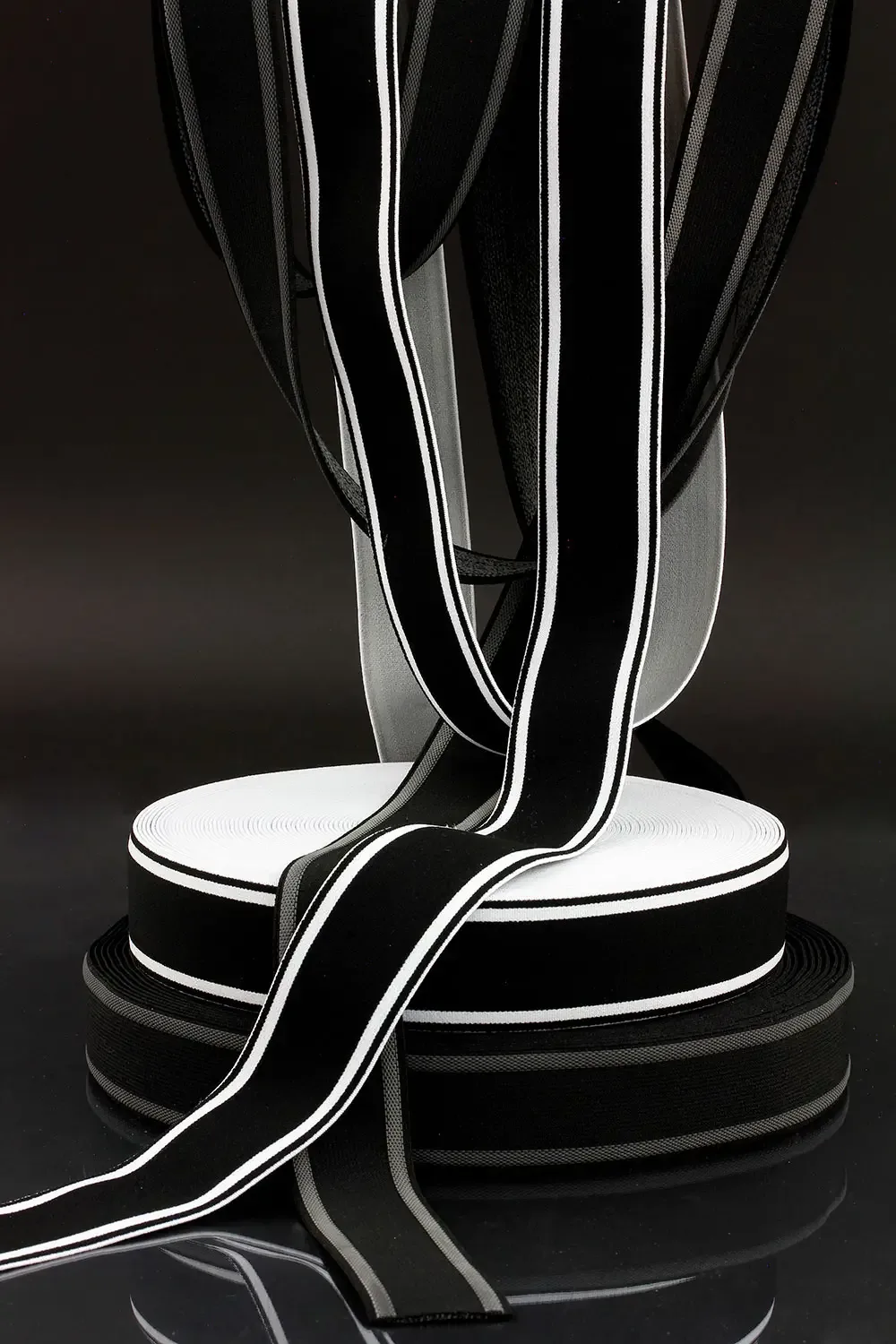
Elastic tape (garment elastic, narrow elastic) is a narrow textile with elastomeric threads of latex or elastane built into its structure. They let the tape stretch under load and return to its original length. Elastic is used in waistbands, underwear, sportswear, cuffs and footwear, and in medical, furniture and technical products.
What elastic is made of
Every elastic tape has two components:
- an elastic core of latex threads, from natural or synthetic rubber, or of elastane yarn, which provides stretch and recovery;
- a covering of polyester, polyamide or cotton yarns, which forms the surface, gives the handle and colour, and protects the core from abrasion.
Latex and elastane
Rubber threads owe their durability to vulcanisation, the cross-linking of rubber with sulphur. Thomas Hancock patented the process in England on 21 November 1843 and Charles Goodyear in the United States in 1844. Goodyear had discovered it by accident in 1839.
Elastane, called spandex in North America and known by the brand name Lycra, is a polyurethane fibre developed in 1958 by the chemist Joseph Shivers at DuPont. Its elongation at break is 500 to 1,000%. Elastane is lighter and finer than latex and stands up better to oils and perspiration. Latex usually gives a stronger recovery force at the same width.
Types of elastic by construction
| Type | How it is made | Behaviour when stretched | Typical uses |
|---|---|---|---|
| Woven elastic | On a needle loom. The elastomeric threads run in the warp and are interlaced with weft. | Does not narrow. Compact, stable and firmer, and hard to twist inside a casing. | Waistbands, workwear, technical products, elastics with a logo. |
| Knitted elastic | On a crochet knitting machine. The elastomer is laid into the loops. | Does not narrow. Soft and light, and can be sewn through without losing stretch. | Underwear, children's wear, cuffs, light products. |
| Braided elastic | On a braiding machine. The threads cross diagonally. | Narrows as it stretches. Piercing it with a needle weakens recovery. | Threaded through casings and sleeves, low-cost products. |
| Jacquard elastic | A woven elastic in which a pattern, lettering or logo is formed in the weave by a Jacquard machine. | As woven elastic. The pattern is also checked when stretched. | Waistbands of boxer shorts, leggings and sportswear with a logo. |
| Elastic cord | An elastic core in a braided cover, round or flat. | A springy cord. | Drawcords, masks, accessories. |
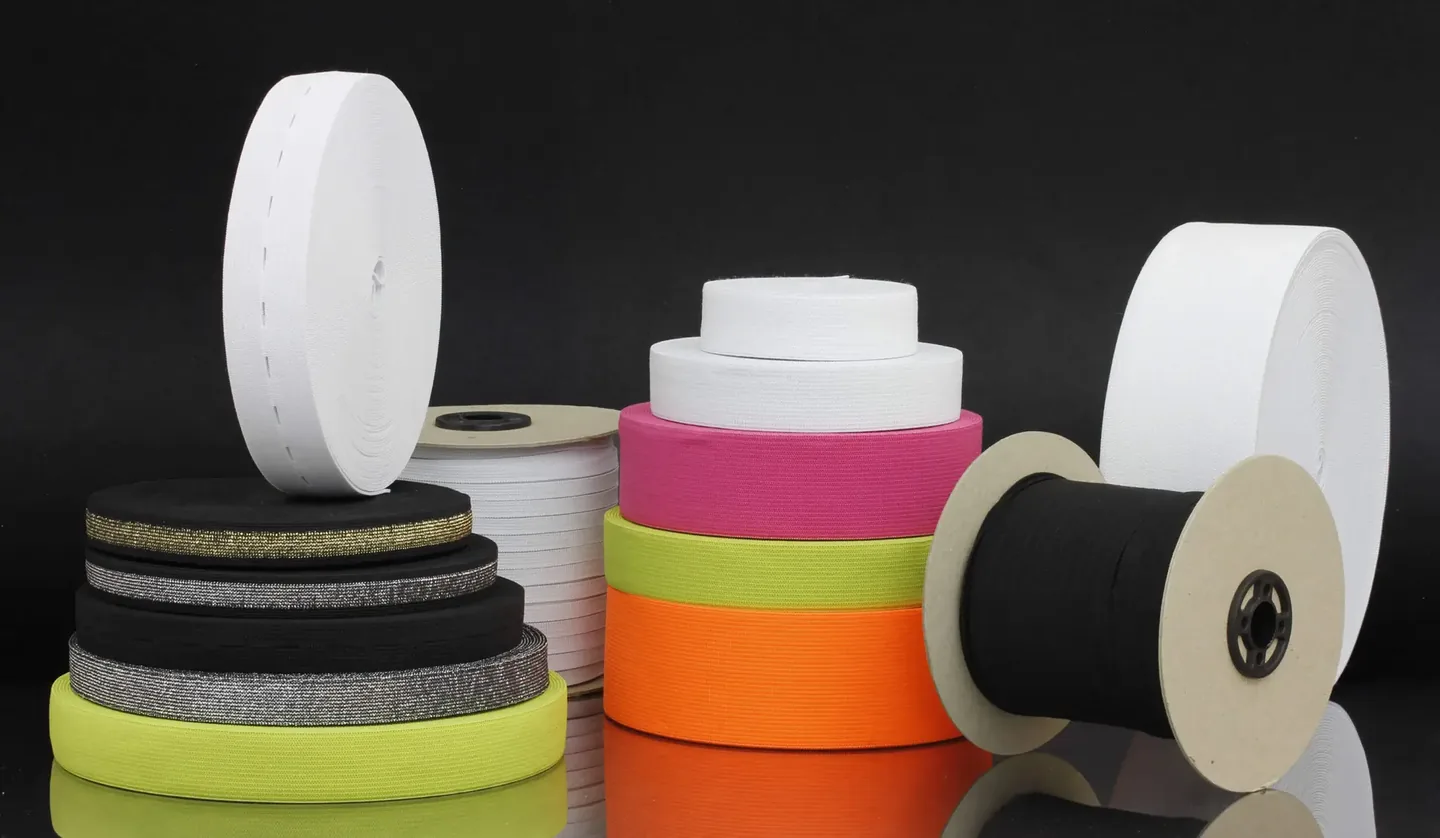
Separate groups are elastics for sublimation printing, which are bleached and calendered to give a smooth surface, resistance bands for training equipment, and silicone-backed elastics, which grip the skin or fabric.
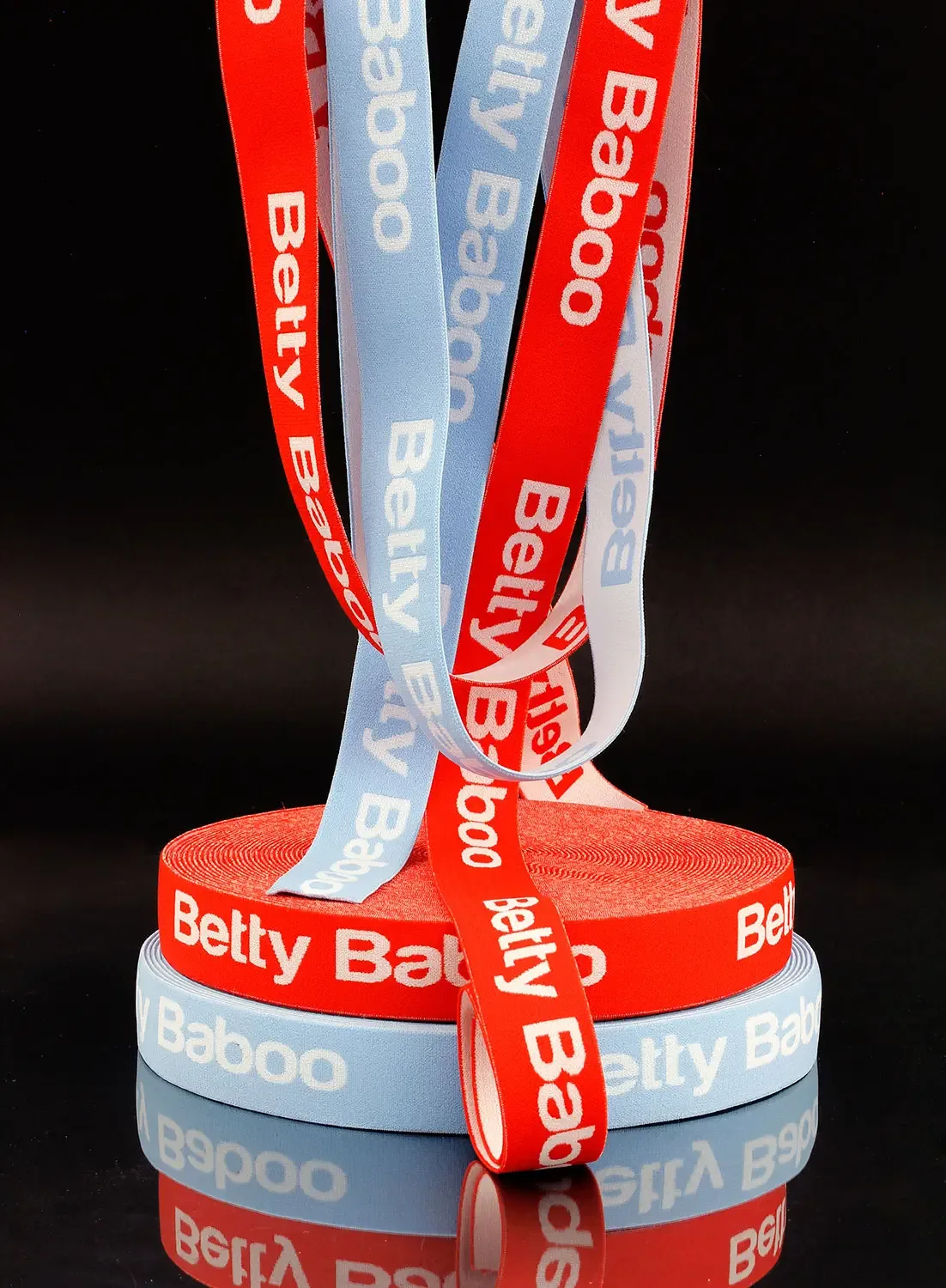
Elastic with a logo or lettering
Lettering can be put on elastic in two ways:
- woven in by jacquard: the logo is made of yarn in the structure of the tape, does not wear off and does not crack when stretched, and the number of colours is limited;
- printed, by sublimation or screen printing: full colour is possible, but the base must suit the method and the print has to stretch with the tape.
In the finished product the elastic is under tension. Letters lengthen and the gaps between repeats grow, so the design is checked on a sample both relaxed and stretched.
Parameters that describe elastic
- Width in millimetres, and thickness.
- Elongation in per cent: how far the tape stretches under a given force or to its limit. A good garment elastic stretches to at least twice its length.
- The force in newtons needed for a given elongation, which says how firmly the tape holds.
- Recovery: how fully the tape returns to its original length after repeated stretching.
- Resistance to washing, heat, chlorine and perspiration. Chlorine and high temperature speed up the breakdown of both latex and elastane, so elastics for swimwear are chosen separately.
- Handle and softness, which matter where the tape touches the skin.
Choosing parameters for a specific product is covered in How to choose apparel or technical elastic tape.
Frequently asked questions
What is the difference between woven and knitted elastic?
Woven elastic is compact and stable and keeps its shape in a waistband. Knitted elastic is soft and light, so it is more common in underwear. Neither narrows when stretched, unlike braided elastic.
Can elastic be made with a logo?
Yes, as jacquard elastic with the logo woven in, or with a print such as sublimation.
What is the elastic in clothes made of?
An elastomeric core of latex threads or elastane, covered with polyester, polyamide or cotton yarn.
Why does a waistband elastic lose its stretch?
The elastomer loses recovery through ageing, heat, chlorine or constant tension. Choosing a construction and raw material that suit the conditions of use helps.
Sources
- Wikipedia, “Elastic (notion)”, en.wikipedia.org
- Wikipedia, “Spandex”, en.wikipedia.org
- Wikipedia, “Vulcanization”, en.wikipedia.org