
Technology
Dye-sublimation printing: how it works and where it fits
Dye that enters polyester fibre under heat: the process, suitable materials and its limits.
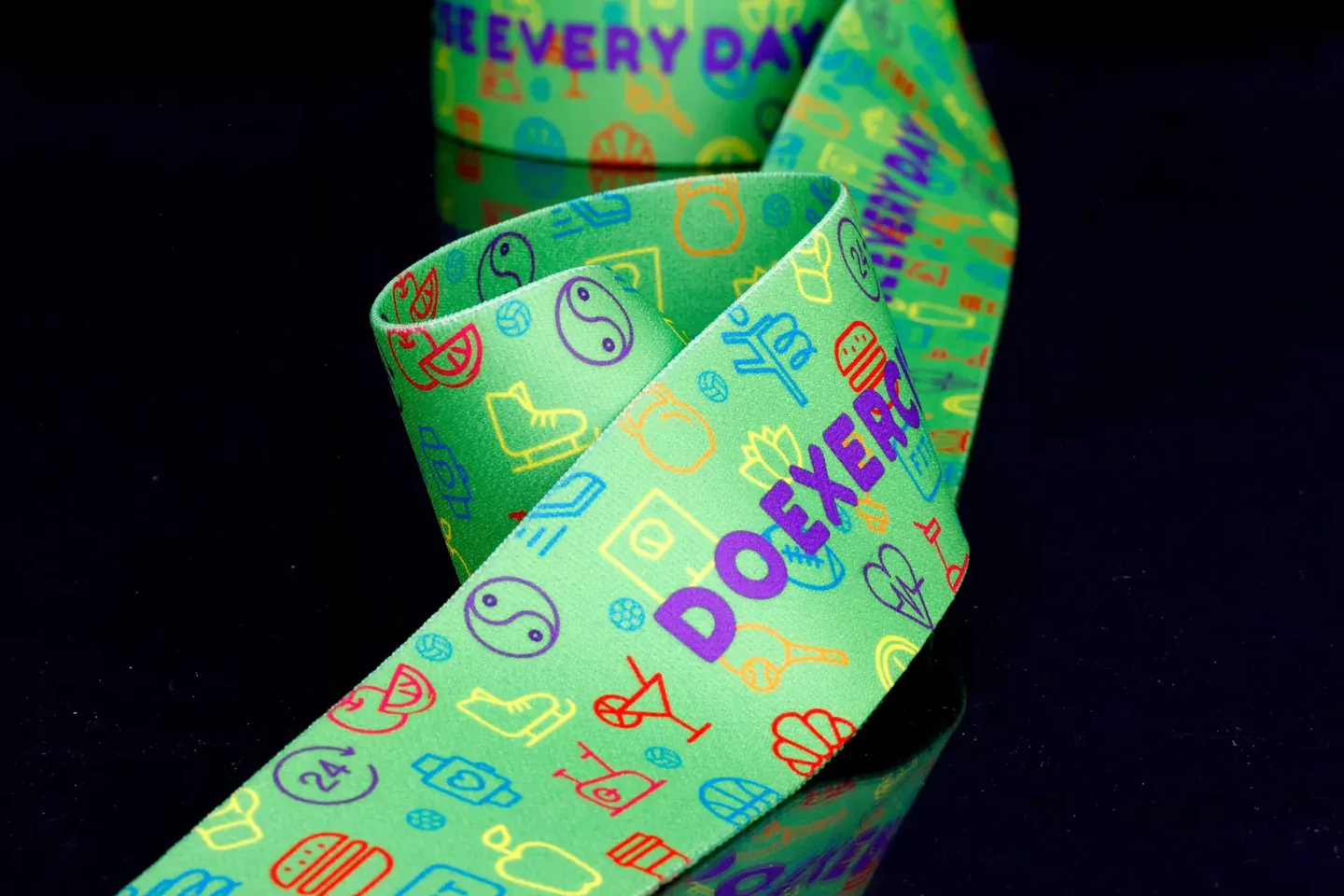
Dye-sublimation printing (sublimation printing) is a technique in which heat moves dye from transfer paper into polyester fibres. The dye becomes part of the fibre, so the print cannot be felt, does not crack and does not wash out.
What sublimation means
In physics, sublimation is the change of a substance from solid straight to gas, without a liquid stage. A familiar example is dry ice, solid carbon dioxide, which sublimes at −78 °C at normal pressure.
The printing technique was named on the assumption that the dye behaves in the same way. It was later shown that some of the dye passes through a liquid stage, so the more accurate term is dye diffusion. The original name has remained in use.
The process
- The artwork is printed as a mirror image on transfer paper with sublimation inks in CMYK colours.
- The paper is placed print side down on the material.
- A heat press or calender presses the two together at about 195 to 215 °C.
- The dye passes into the polyester fibres and stays there once they cool.
The result depends on three settings: temperature, time and pressure. They are chosen for the material, which is why a trial on the intended base comes before a production run.
A short history
The technique dates from 1957. It was first used in industrial textile printing. Digital printing on transfer paper later spread it to advertising, sportswear and promotional goods.
Materials and limits
- A fabric of 100% polyester gives the best result. In blends only the polyester takes the dye, so colours are paler.
- Pure cotton does not take sublimation dye.
- The inks are transparent, so the base must be white or very pale. A print on dark material will not show.
- The dye spreads slightly in the fibre, so edges are a little less sharp than in direct printing.
- Hard items such as mugs or aluminium sheet need a factory-applied polyester coating.
Sublimation, heat transfer and jacquard
| Technique | Where the colour is | What it can do | Limits |
|---|---|---|---|
| Sublimation | In the polyester fibre. | Full colour, gradients, photographs, a repeating design across the full width. | Pale polyester only. |
| Heat transfer vinyl | In a film pressed onto the surface at 120 to 150 °C. | Works on cotton, polyester and blends, including dark ones. | Each colour is cut separately, with no gradients. The film can be felt. |
| Jacquard | In the yarn the pattern is woven from. | The highest durability, with the pattern on both sides of the product. | A few colours, no tonal transitions. |
The choice between sublimation and jacquard for webbing and lanyards is covered in Sublimation printing on webbing and lanyards. How a woven pattern is built is explained in The Jacquard machine.
Sublimation on narrow textiles
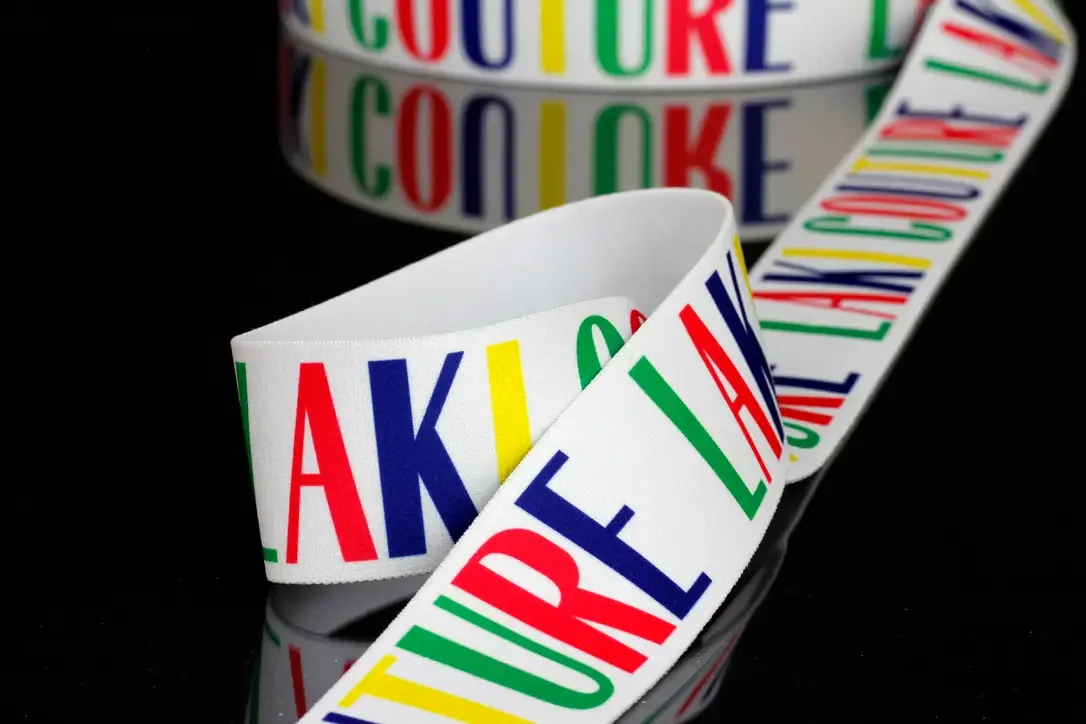
On webbing, elastic tapes and shoelaces, sublimation printing runs continuously from roll to roll. The design has a repeat, the length after which it starts again. The artwork has to allow for the width of the webbing, the margins and the point where it will later be cut. On elastic tapes the print is also checked when stretched.
Frequently asked questions
How does dye-sublimation printing work?
The artwork is printed on transfer paper and then moved onto polyester at about 200 °C. The dye enters the fibres and stays there permanently.
Can cotton be sublimation printed?
No. Sublimation dye bonds only with polyester or a polyester coating.
What is the difference between sublimation and heat transfer?
In sublimation the colour is in the fibre and forms no layer you can feel. In heat transfer a film is pressed onto the surface of the material.
Why does the material have to be white?
Sublimation inks are transparent and contain no white, so the base colour shows through the print.
Sources
- Wikipedia, “Dye-sublimation printing” and “Heat transfer vinyl”, en.wikipedia.org
- Wikipedia, “Druk sublimacyjny” and “Sublimacja”, pl.wikipedia.org