
Materials
Lingerie elastics: types, finishes and requirements
Narrow elastics that lie against the skin all day: their types, raw materials and what underwear demands of them.
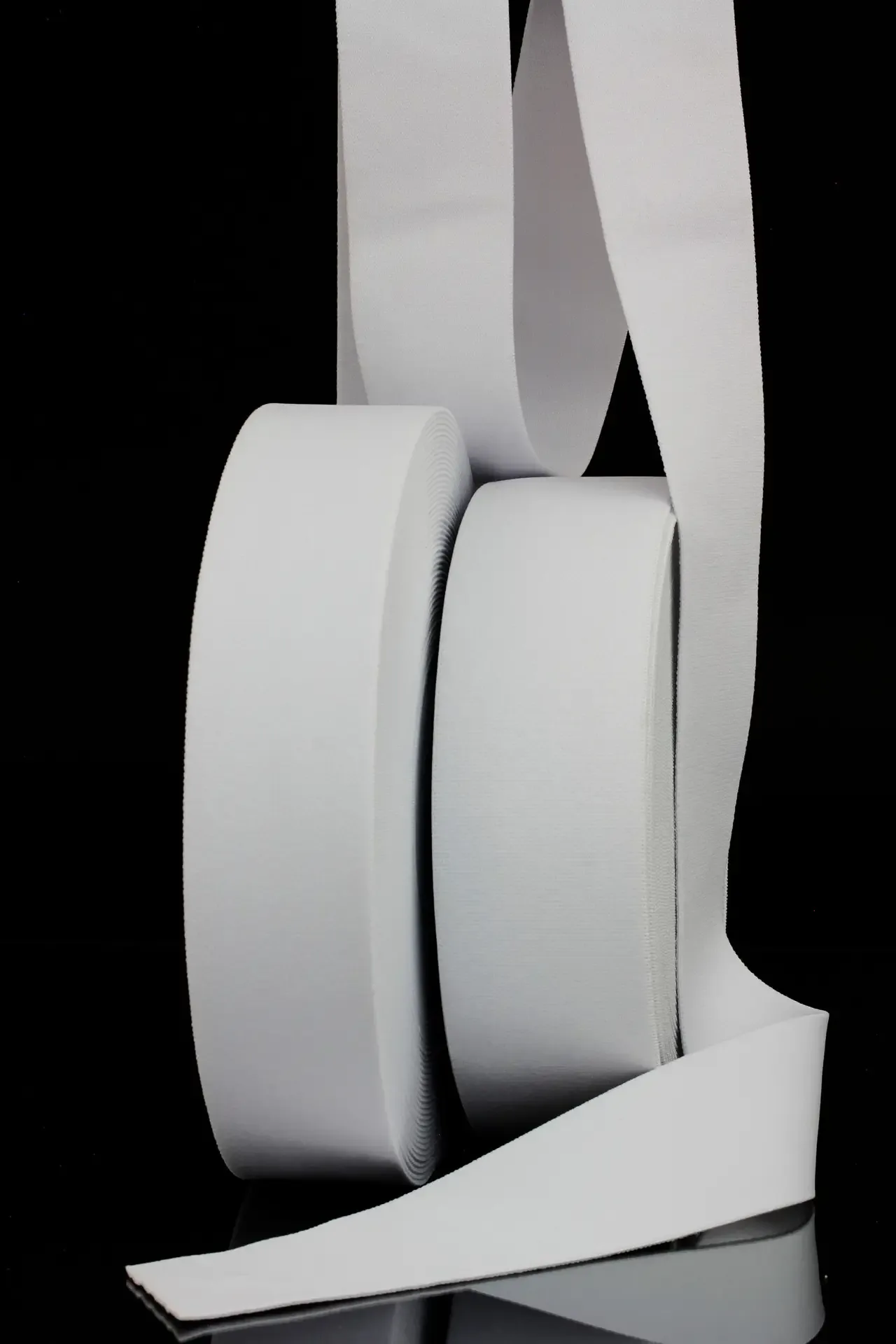
A lingerie elastic is a narrow, flat elastic tape made for underwear: bras, briefs, boxer shorts, bodysuits and nightwear. It differs from other garment elastics in that it lies against the skin all day. It therefore has to be soft and still keep its stretch after many washes.
A short history
Elastic underwear became possible in the 1930s. In 1931 Lastex yarn came onto the market: a rubber core wrapped in cotton, silk, wool or rayon threads. It could be woven and knitted like ordinary yarn, so it soon found its way into bras, girdles and swimwear. In 1958 elastane, lighter and finer than rubber, was developed at DuPont. Lingerie elastics are made from both today.
Types of lingerie elastic
| Type | Features | Use |
|---|---|---|
| Strap elastic | Narrow, with low stretch along its length, smooth and often glossy. Works with an adjuster. | Straps of bras, slips and bodysuits. |
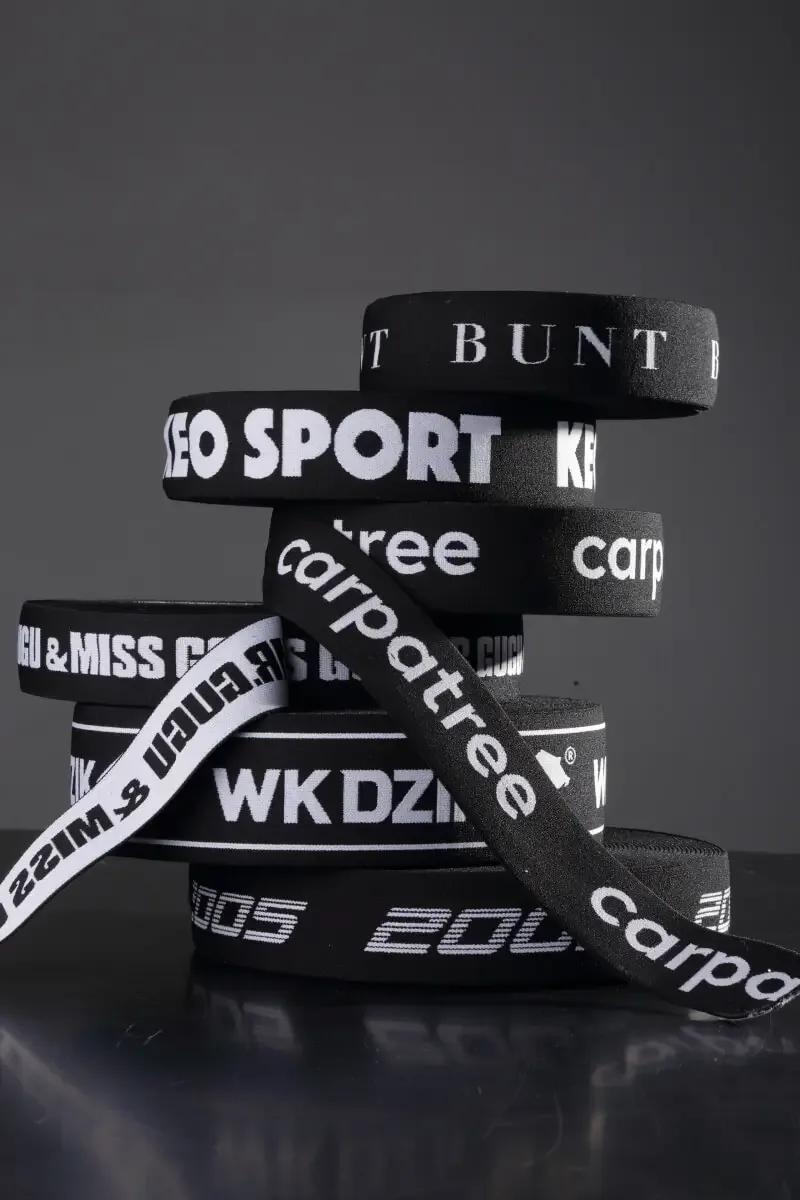
| Waistband elastic | Wider, with an even pull round the whole waist. Often jacquard, with a woven logo. | Waistbands of boxer shorts, briefs and leggings. |
| Edging elastic | Narrow and soft, used to bind edges. | Leg openings, necklines, bra edges. |
| Picot elastic | One edge carries a row of small loops that form a decorative trim once sewn in. | Edges of briefs and bras, women's underwear. |
| Plush elastic | The side worn against the body is brushed, which makes it soft to the touch. | Bra underbands and other places under constant pressure. |
| Silicone-backed elastic | Carries applied silicone that grips skin or fabric. | Hold-up stockings, strapless bras, sportswear. |
Construction and raw materials
Lingerie elastics are knitted or woven. Knitted ones are soft and light, so they dominate in edgings and straps. Woven ones are more compact and hold their shape better at the waist. The elastic threads are latex or elastane. The covering yarn is most often polyamide, which is smooth and soft, and less often polyester or cotton. The differences between constructions are described in Elastic tape: woven, knitted, braided and jacquard.
Requirements
- Softness and smooth edges, with nothing that could irritate the skin.
- Recovery to the original length after repeated stretching and washing.
- Resistance to perspiration, cosmetics and detergents.
- A consistent colour from batch to batch, because the elastic is matched to the colour of the fabric.
- Documented safety of the raw materials for products worn next to the skin, for example compliance with OEKO-TEX STANDARD 100.
The scope of such documents is explained in OEKO-TEX certification and textile documentation.
What to state in an enquiry
- Where the elastic will be used: strap, waistband or edge.
- The width and the stretch required.
- The surface: smooth, plush, picot or silicone-backed.
- The colour, ideally with a swatch of the fabric.
- The logo or pattern, if the elastic is to be jacquard.
- The length of each variant and the put-up.
Matching parameters to a specific product is covered in How to choose apparel or technical elastic tape.
Frequently asked questions
How does a lingerie elastic differ from an ordinary garment elastic?
It is softer, has smooth edges and uses skin-friendly yarn, because it stays in contact with the body.
What is picot elastic?
An elastic with a row of small loops along one edge. Once sewn in, they form a decorative trim.
What are lingerie elastics made of?
Latex threads or elastane, with polyamide, polyester or cotton yarn.
Can a waistband elastic carry a logo?
Yes. The logo is woven into the structure of a jacquard elastic, so it does not wear off or crack when stretched.
Sources
- Wikipedia, “Lastex”, “Spandex” and “Picot”, en.wikipedia.org